Tree Weight Reduction Techniques for Heavy Overhanging Limbs
@tysonjuxs452
Large trees enhance the natural beauty of the Illawarra, but when substantial branches extend across roofs, driveways, or boundary fences, they create significant hazards. In Wollongong, properties positioned between the coast and the Illawarra Escarpment face intense environmental pressures, including high winds, sudden southerly busters, and prolonged rainfall. These conditions make structurally compromised or excessively heavy overhanging limbs prone to sudden failure. Mitigating this risk requires precise weight reduction pruning techniques that preserve the tree's health while protecting surrounding structures.
Why Overhanging Limbs Fail in Coastal and Escarpment Environments
Branches act as levers. As a limb grows outward and accumulates foliage, the mechanical strain at the branch union increases exponentially. When heavy rains saturate the canopy and strong winds exert drag, the torque applied to the limb attachment can exceed the wood's structural capacity. In Wollongong, common species such as Eucalyptus grandis (Flooded Gum), spotted gums, and large figs frequently develop extended lateral limbs with heavy end-weight. Without proper canopy maintenance, these limbs can split at the union or snap mid-span, leading to property damage or personal injury.
Arboricultural Techniques for Relieving Branch Weight
Effective weight reduction is not simply cutting off the end of a branch. Indiscriminate lopping or "topping" creates weak epicormic growth that fails easily in future storms. Professional arborists apply Australian Standard AS 4373-2007 (Pruning of Amenity Trees) to modify the canopy while maintaining the biological and structural stability of the tree.
Key Pruning Methods for Overextended Limbs
- Reduction Cutting (Drop-Crotch Pruning): Shortens the overall length of a limb by cutting back to an existing lateral branch capable of assuming terminal growth. The remaining lateral limb should be at least one-third the diameter of the removed branch to ensure sap flow continues and decay is minimised.
- End-Weight Alleviation: Involves selectively removing secondary and tertiary foliage clusters near the outer tip of the branch. By shifting the centre of gravity closer to the trunk, the mechanical leverage exerted on the branch union is dramatically reduced.
- Crown Thinning: Selectively removes smaller, weak, or crossing branches throughout the outer canopy. This permits air to flow freely through the crown, lowering wind resistance during severe coastal storms without changing the tree’s overall profile.
- Subordination Pruning: Suppresses the growth rate of an aggressive lateral branch so it does not outgrow its attachment point, allowing surrounding branches to develop a balanced framework.
Supplemental Support: Non-Invasive Cabling Systems
When weight reduction pruning alone cannot resolve structural instability—such as in trees with included bark or structural splits at the union—supplemental structural support may be necessary. Dynamic cabling systems are widely used across the Illawarra to allow controlled branch movement while arresting sudden, catastrophic shock loads during high-wind events. These synthetic systems expand and flex under normal conditions, preventing girdling and promoting natural trunk strengthening, while functioning as a secondary safety net for heavy overhanging sections.
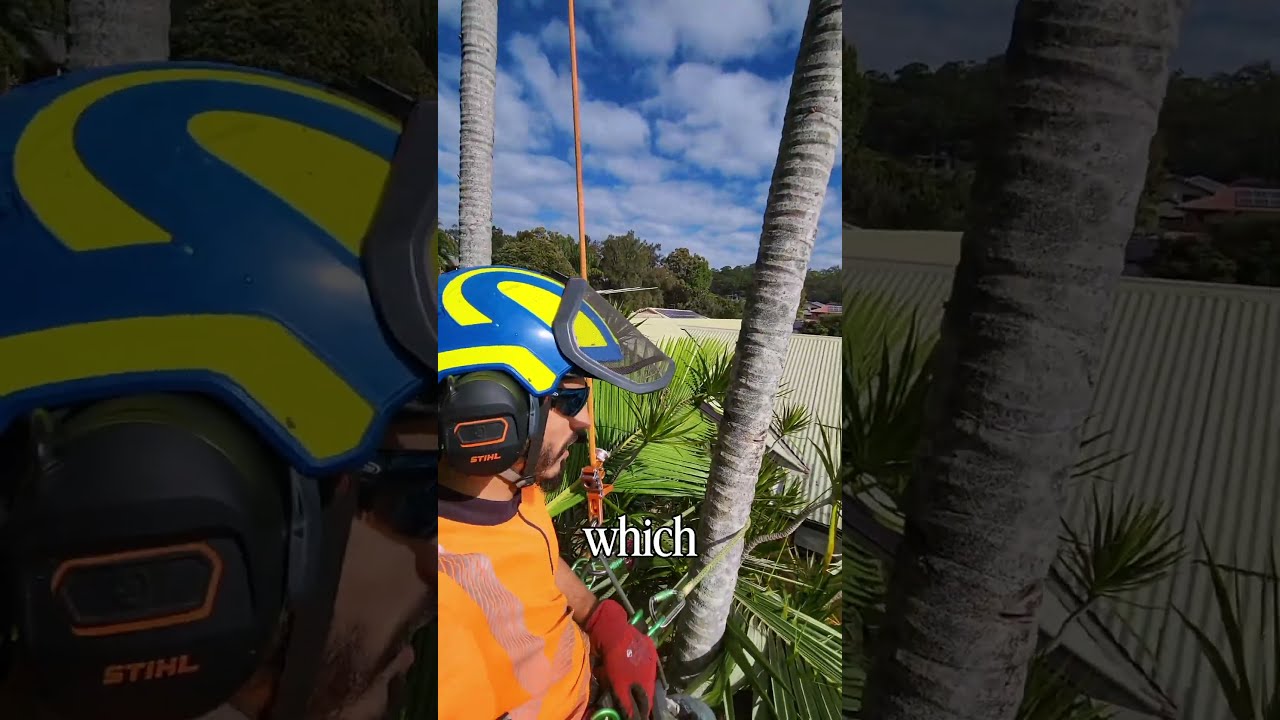
Navigating Wollongong City Council Regulations
Before undertaking any major branch reduction, Wollongong residents must consider local tree protection regulations under the Wollongong Development Control Plan (DCP). Pruning of native and non-native trees exceeding https://treeremovalwollongong.com.au/palm-tree-removal/ specific height and trunk circumference thresholds often requires a permit or notification unless carried out under an exempt category, such as minor pruning of overhanging branches up to an approved percentage, or under emergency directives. Engaging an AQF Level 3 or Level 5 consulting arborist ensures all pruning specifications are documented, comply with local biodiversity guidelines, and keep properties legally compliant.
Signs Your Trees Require Immediate Assessment
Visual indicators often signal that an overhanging branch is reaching its structural limit. Regular inspections around property boundaries and buildings help prevent unexpected failures before severe weather strikes.
- Sagging Canopy: A limb that dips significantly lower after rain or as foliage density increases in spring.
- Cracking at the Union: Visible longitudinal splits or peeling bark where the branch meets the main stem.
- Cavities and Fungal Growth: Conks or brackets growing along the underside of a limb, indicating internal decay and reduced load-bearing capacity.
- Excessive Foliage Clustered at Tips: "Lions-tailing" caused by previous poor pruning, which concentrates all branch mass at the outer perimeter.
Addressing heavy overhanging branches promptly safeguards both your home and the long-term vitality of your urban canopy. Systematic weight reduction allows large trees to coexist safely with homes, utility lines, and outdoor living areas across Wollongong.
Wollongong Tree Removal Pros
106 Gipps St, Wollongong NSW 2500
(02) 4210 5945